Sea Base Lessons Learned
What our 2026 St. Thomas crews learned, for the crews that come next.
Preparing for the trip
- Set up a GroupMe chat/DM group for the crews and parents.
- Ask for other adults to help you sooner rather than later. There are a lot of moving pieces with a St. Thomas trip, with several timelines running in parallel — Class B shirts, payments, health forms, crews watching the Sea Base videos, the annual BSA swimming test. Many hands make light work.
- Ask the Scouts to learn and practice the knots that will be used when sailing.
- Check whether this high adventure will be the 3rd or 4th for any of the Scouts or adults. They will qualify for the Triple Crown or Grand Slam patch. Look at the application form so you know what details need to be completed: nationalhighadventureawards.org/faq
- Make sure the Scouts know which patches they can earn on the trip. Refer to the Sea Base Guide.
- Collect the Sea Base payments early.
- Get each crew together to practice snorkeling in a pool. If possible, have a trained adult take the Scouts through the BSA Snorkeling requirements. The adult crew leaders should attend as well. It gives you an opportunity to see how comfortable each Scout is in the water. Also practice the man-overboard position — the HELP position (Heat Escape Lessening Posture).
- Have a barbecue after the snorkeling — it’s a good get-to-know-you event for the crew before they head off to St. Thomas.
- Get swim tests done early in the summer so that you can see how comfortable each Scout is in the water.
Transportation
Travel logistics can be tricky.
- Decide if you want to fly in a day early. We would do this next time. The direct flight from DFW to St. Thomas was delayed and arrived after the specified time, so the first night had to be in the marina. (If you arrive after 4 pm you have to spend the first night in the marina rather than moored out at sea.)
- If you don’t want to be in St. Thomas for an extra day, consider flying to Florida the day before. Pick an airport that has more than one flight a day to St. Thomas, and spend one night in Florida so you can arrive early.
- Getting between St. Thomas airport and Sea Base is easy with Franklin Transport. Sea Base has an ongoing relationship with Franklin Connor to provide crews transportation to and from the airport. Franklin Connor can be reached at (340) 727-0841 (text preferred). Crews are responsible for the fare, and taxi fare is cash only. Fares are regulated by the government. Make your ground transportation arrangements well in advance.
- Use a travel agent to book the tickets and collect payments from the parents. Everyone needs to be on the same flight, and a travel agent handles that best. Ask the committee for the travel agent the troop has used before.
- Most importantly, check that everyone has a passport or TSA-approved photo ID. Each adult crew leader must actually be given a copy of the passport to view. Requirements can change, so check the most recent ID requirements. Know what your Plan B is if someone unexpectedly loses their passport or ID at any point during the trip.
Class B shirts
Order your Class B crew shirts early, from classb.com/bsa. Pick a color that you will actually see in the water. We chose a sea foam green and a coral.
You can get a bulk purchase discount and still have crew shirts that look different from one another. To do this, use the same print design on all the shirts, then pick a different shirt color for each crew. We did the same design in teal on two different colored shirts.
Note: download the measurement specs for the shirts and share them with the parents. The shirt sizes (small, medium, large) were misleading.
The shirt we used: Sport-Tek® Posi-UV® Pro Long Sleeve Hoodie
- 4-ounce, 100% polyester interlock with PosiCharge® technology
- UPF rating of 50
- Tear-away label
- Set-in sleeves
What we needed
- Wet weather gear for sleeping outside (the rain can be cold)
- Weather forecasts
- A cash tip for the captain. We gave $20 per crew member. A thank-you card or note paper to write on (for the captain).
What we didn’t need
- Insect repellent
- A bottle of sunscreen for each person
- Swimmer’s ear solution for each Scout
- Snorkeling fins
What we would do again
-
Have two shakedowns before we leave. At the second shakedown, we checked everyone’s personal first aid kit and topped up their supplies if they were missing anything.
-
Take clips and paracord to attach the sleeping pad to the railings, so the pad doesn’t blow into the ocean when the Scout gets off it (it has happened in the past).
-
Sit down the first night with the captain and plan out the activities and meals, so that you aren’t making an elaborate breakfast on a day you need to get moving early, or defrosting chicken just in time to make dinner.
-
Take pajamas (shorts and a T-shirt). They’re not on the packing list, but it was really nice to change into something not damp or salty at night.
-
Everyone had a Bonine each morning, and no Scouts suffered from seasickness. Start seasickness medication before you need it — waiting until someone feels sick is too late.
-
Other posts mention bringing a battery-operated fan because it gets warm when the wind drops. This is only an issue if you sleep in the cabin. Most nights we all slept on deck.
-
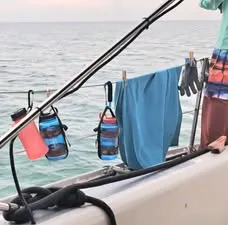
Carabiners for water bottles and clothespins for towels work great on any boat. But some captains want plastic clothespins and others want wooden — we went wooden (more degradable if they get lost overboard).
-
We banned any drinks or drink additives that are intensely colored. If they spill, they can stain the deck.
-
A Scout needs water shoes, but Crocs are banned — way too dangerous to wear on a deck. We all had bare feet.
-
No one got badly sunburned. Everyone put on sunscreen in the morning. We also wore head coverings to stop the part in our hair from getting sunburned. Other posts mention neoprene socks (and an extra pair of non-cotton socks), which saved kids who sunburned the tops of their feet on day one.
-
Bring one extra empty dry bag to put footwear in for swim-to-shore excursions. Bring a second one for all the souvenir shopping that needs to get from the island back to the boat.
The Scouts’ personal first aid kit
Each Scout has their own small first aid kit. Pills, gel packs and gummies work better on boats than liquids, which will spill on a rolling boat.
- Motion sickness tablets
- Antibacterial ointment
- Prescriptions
- Waterproof Band-Aids
- Aloe gel / after-sun gel
- Two 4x4 gauze pads
- Reef-safe sunscreen (only use mineral sunscreen — it’s the law in the U.S. Virgin Islands)
- Hand sanitizer
- Swimmer’s ear solution. Recipe: equal parts white vinegar and rubbing alcohol (70% isopropyl alcohol)
Communicating back home when at sea
- Prepare the parents for a lack of cell phone contact.
- Turn off your cell phones when you are near the British Virgin Islands — you will get charged overseas roaming charges.
- As a U.S. territory, St. Thomas is treated as part of your domestic coverage, so most plans include standard talk, text and data without roaming fees (confirm with your carrier). However, a Scout could accidentally run up a very high cell phone bill.
- BVI warning: be cautious when near the eastern side of the island or on boat excursions toward St. John. Your phone may accidentally connect to British Virgin Islands cell towers, which will result in expensive international roaming charges. Turn off data roaming when on the water or near the BVI.
- Leaders generally prefer that phones be kept in airplane mode or turned off, to save battery and avoid accidental international roaming charges. The Scouts will be encouraged to put their phones in airplane mode for the duration of the trip.
- The Scoutmasters intend to post updates and coordinate any emergency communications, rather than having Scouts call home directly.
- Scoutmasters typically treat phones on high-adventure trips as tools for navigation and photography rather than entertainment.